MENTAL HEALTH-PROFESSIONAL DRIVERS.

Updated: 2 days ago
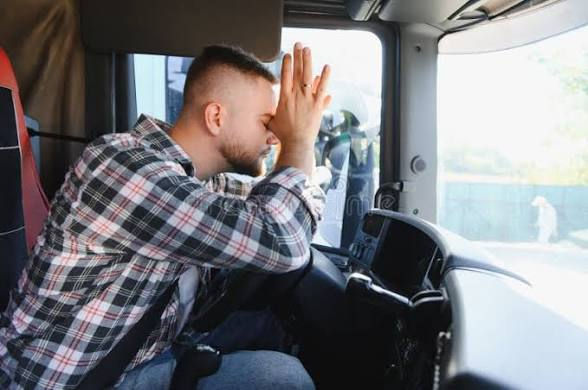
We talk a lot in transport about maintaining the vehicle.
We check tyres, brakes, lights, fluids and defects. We monitor driving hours and take vehicles off the road when something isn't safe.
The person sitting behind the wheel deserves exactly the same attention.
Mental health is health.
It is completely normal to struggle sometimes with life. You would put a plaster on a cut, seek treatment for an infection or put a broken limb in a cast. Looking after your mental health should be no different.
You do not have to be experiencing a mental health crisis to deserve help.
Sometimes the first sign that something is wrong is simply:
"I don't quite feel like myself."
Pay attention to that.
WHY PROFESSIONAL DRIVING CAN BE TOUGH
Driving can be an enormously rewarding career, but there are aspects of the job that can place considerable pressure on mental wellbeing.
These can include:
long working days;
very early starts or night work;
disrupted sleep;
fatigue;
time away from family and friends;
isolation and long periods alone;
traffic and road conditions;
delivery deadlines and time pressure;
responsibility for an expensive vehicle and load;
difficult customers or delivery sites;
financial pressures;
poor access to decent food, showers, toilets and rest facilities;
unexpected delays;
enforcement and compliance pressures;
accidents, near misses and serious incidents; and
trying to balance work with everything happening at home.
Long hours, isolation, delivery pressure, congestion and time away from home can all affect drivers' emotional wellbeing. Poor mental health can also affect concentration, judgement, reaction and decision-making.
Looking after your mental health is therefore not separate from being a professional driver.
It is part of being a safe one.
CHECK IN WITH YOURSELF
Get into the habit of doing a quick mental check-in every day.
It doesn't need to be complicated.
Ask yourself:
How am I actually feeling today?
How did I sleep?
Am I unusually anxious, angry or low?
Am I exhausted?
Am I concentrating properly?
Am I enjoying anything at the moment?
Am I coping, or am I just getting through the day?
Do I need to talk to somebody?
One bad day is part of being human.
What matters is noticing when a bad day becomes a bad week, or when something simply isn't improving.
RECOGNISING WHEN YOU MAY BE STRUGGLING
Mental health difficulties don't always look like somebody crying or saying that they are depressed.
Sometimes they look like:
becoming unusually irritable or angry;
losing patience very quickly;
feeling constantly overwhelmed;
worrying excessively;
struggling to switch off;
feeling flat or emotionally numb;
losing interest in things you normally enjoy;
withdrawing from family, friends or colleagues;
avoiding phone calls or messages;
changes in sleep;
sleeping but never feeling rested;
changes in appetite;
relying increasingly on alcohol or other substances to unwind;
struggling to concentrate;
making unusual mistakes;
feeling unable to make decisions;
dreading going to work;
feeling that everything is becoming an effort;
constantly feeling "on edge";
unexplained physical symptoms such as headaches, stomach problems or muscle tension; or
simply knowing that you don't feel like yourself.
You don't need to diagnose yourself.
If something feels wrong, that is enough reason to pay attention.
STRESS
Stress is not automatically a mental illness.
Short periods of pressure are a normal part of life and work.
The problem arises when the pressure becomes relentless and you no longer have enough opportunity to recover from it.
You may notice that you are permanently rushing, your mind continues running when work has finished, minor problems feel enormous, you're becoming short-tempered, your sleep is deteriorating or you're struggling to concentrate.
Don't wait for stress to become unmanageable before doing something about it.
Where possible:
identify what is actually causing the pressure;
talk to your employer, manager or Transport Manager;
take your proper breaks;
eat and hydrate properly;
protect your sleep;
get outside and move when you can;
stay connected with people;
don't use alcohol as your main method of switching off;
deal with problems individually rather than mentally carrying ten at once; and
ask for help when you need it.
You cannot control traffic, weather, loading delays or somebody else's behaviour.
Concentrate on what is within your control.
And remember: no delivery deadline is improved by having an exhausted, overwhelmed or distracted driver behind the wheel.
FATIGUE ISN'T JUST "BEING A BIT TIRED"
Mental and physical wellbeing overlap.
Fatigue can affect mood, patience, concentration and your ability to cope with stress. Equally, anxiety, stress and low mood can seriously disrupt sleep.
Driving tired is a safety issue.
Don't confuse complying with the legal minimum rest requirements with automatically being fit to drive.
Legal to drive and fit to drive are not necessarily the same thing.
If you are struggling to keep your eyes open, repeatedly yawning, losing concentration, missing signs or exits, drifting mentally or cannot clearly remember the last few kilometres, take it seriously.
Find somewhere safe to stop.
BURNOUT
Burnout generally develops over time rather than arriving overnight.
It can follow prolonged periods of excessive work pressure without adequate recovery.
You may feel:
physically and mentally exhausted;
detached from your job;
increasingly cynical or negative;
unable to motivate yourself;
unable to recover properly on days off;
overwhelmed by things you previously managed;
unusually emotional or irritable; or
as though you have simply run out of capacity.
A weekend off may help ordinary tiredness.
It does not necessarily fix burnout.
If you recognise yourself here, talk to somebody and consider speaking to your GP.
SOMETIMES LIFE IS JUST HARD
Sometimes there isn't a diagnosis.
Life can simply be difficult.
Relationship problems, bereavement, illness in the family, financial worries, parenting, caring responsibilities, loneliness and countless other things don't disappear when you insert your driver card.
You are still a human being while you are at work.
If something happening in your personal life is affecting your concentration or ability to drive safely, tell somebody you trust.
You don't necessarily have to explain every private detail.
Sometimes:
"I'm having a difficult time at the moment and I'm not myself today."
is enough to start the conversation.
AFTER AN ACCIDENT OR SERIOUS INCIDENT
Even highly experienced professional drivers can be affected by an accident, serious near miss or traumatic incident.
You might have been physically uninjured and still be affected psychologically.
Afterwards you may experience:
shock;
shaking;
tearfulness;
anger;
guilt;
intrusive memories;
repeatedly replaying what happened;
difficulty sleeping;
nightmares;
anxiety about driving;
feeling constantly on alert;
difficulty concentrating; or
emotional numbness.
People respond differently to frightening events.
Do not tell yourself that you "should be fine" because somebody else appears to be coping differently.
Immediately after a serious incident, deal with safety, emergency procedures and reporting requirements first.
Once the immediate situation is under control, look after the person involved as well as the paperwork.
Talk to somebody you trust. Accept support. Give yourself time to process what happened.
If symptoms are severe, persist, worsen or interfere with everyday life or driving, speak to your GP or another qualified healthcare professional.
And if you do not feel psychologically capable of safely continuing to drive after an incident, say so.
WORK/LIFE BOUNDARIES
This can be particularly difficult in transport because the job doesn't always finish neatly at 5pm.
But you still need time when you are not mentally at work.
Where your job allows:
establish a point at which the working day ends;
avoid repeatedly checking work messages when you're off;
use your annual leave;
maintain friendships and interests outside transport;
protect family time;
make sleep a priority;
don't agree to every extra shift simply because you were asked;
learn to say when you have reached your limit; and
allow yourself proper recovery time.
Your entire identity does not have to be your job.
You can absolutely love driving lorries and still need time away from them.
TALK TO SOMEONE
One of the worst things you can do when you're struggling is convince yourself that you have to deal with everything alone.
Talk to:
your partner • friend • colleague • manager • Transport Manager • family member • GP • counsellor • mental-health professional • support organisation
You don't need an eloquent explanation.
Try:
"I'm struggling a bit."
Or:
"I haven't felt like myself lately."
Or simply:
"Can I talk to you?"
That's enough.
SPEAK TO YOUR GP
Your GP isn't only there for physical illness.
If your mood, anxiety, stress, sleep or ability to cope has changed — particularly if it has persisted — make an appointment.
You do not have to arrive knowing whether you have anxiety, depression, burnout or anything else.
Tell them what has changed and how you have been feeling.
Mental-health symptoms can also overlap with physical conditions, sleep problems, medication effects and other health issues, which is another good reason not to diagnose yourself.
SUPPORT SPECIFICALLY FOR THE TRUCKING & TRANSPORT COMMUNITY
Sometimes talking to somebody who understands the industry can make reaching out a little easier.
Breaker Breaker
Breaker Breaker is a registered Northern Irish charity established specifically around mental health within the haulage industry.
Its support extends to people working throughout haulage — including drivers, office and yard staff — across the UK and Ireland.
It provides confidential support through Inspire, including telephone support, online self-help and advice and, following assessment where appropriate, funded one-to-one counselling.
Website: https://breakerbreakertruckshow.com/
10-4 CHANNEL 19 — TANGS MENTAL HEALTH
10-4 Channel 19 — Tangs Mental Health is a Facebook-based mental-health initiative within the trucking community.
Driver-led and driver-focused communities can provide an important point of contact for people who may find it easier to speak to somebody who understands the realities of life on the road — the long hours, isolation, fatigue, pressure and time spent away from home.
Sometimes you don't need somebody to understand trucking and your problem.
You need somebody who already understands trucking so you only have to explain the problem.
Find them on Facebook by searching:"10-4 Channel 19 Tangs Mental Health"
Mates in Mind
Mates in Mind works to improve workplace mental health and reduce stigma, including within transport and logistics.
It provides mental-health information, workplace resources and guidance designed to encourage people to talk openly about mental wellbeing.
Website: https://www.matesinmind.org/
SUPPORT IN IRELAND
You do not have to use a transport-specific service.
There are confidential services available whenever you need somebody to talk to.
SAMARITANS IRELAND
If you are struggling, lonely, distressed or simply need somebody to listen, Samaritans provides confidential emotional support 24 hours a day, 365 days a year.
Freephone: 116 123
You do not need to be suicidal to call Samaritans.
HSE — YOUR MENTAL HEALTH
The HSE provides information and signposting to mental-health services and supports throughout Ireland.
Your Mental Health information line: 1800 111 888
The information line can explain what services and supports are available. It is not itself a counselling service.
TEXT ABOUT IT
If speaking aloud feels difficult, Text About It provides a free, anonymous messaging service.
Text HELLO to 50808
Sometimes typing the first sentence can feel easier than saying it.
PIETA
Pieta provides support for people experiencing suicidal thoughts or self-harm and for people bereaved by suicide.
24-hour Crisis Helpline: 1800 247 247
Text HELP to 51444
IF YOU ARE WORRIED ABOUT ANOTHER DRIVER
Sometimes you notice the change before they do.
Perhaps a normally chatty colleague has gone quiet.
Maybe somebody who is normally calm has become angry or irritable.
Maybe they're making unusual mistakes, looking exhausted, withdrawing from everyone or simply don't seem themselves.
Ask.
"Are you alright?"
And if the automatic answer is "Yeah, grand", it is perfectly okay to ask again:
"No, seriously. Are you actually alright?"
You do not need to be a counsellor.
Listen.
Don't ridicule them.
Don't immediately try to fix everything.
Don't turn it into workplace gossip.
Help them find appropriate support if they need it.
Sometimes the most important thing you can do is make sure somebody knows that another person has noticed and cares.
IF THINGS FEEL REALLY BAD
If you are thinking about harming yourself, feel unable to keep yourself safe, or believe you may be in immediate danger, treat it as an emergency.
If you are driving, find somewhere safe and stop the vehicle.
Seek immediate help.
In Ireland, call 112 or 999 in an emergency.
You can also contact:
Samaritans — 116 123, 24/7
Pieta — 1800 247 247, 24/7
Text About It — text HELLO to 50808
You do not have to deal with a crisis alone.
ONE LAST THING
Professional drivers spend enormous amounts of time looking ahead.
You anticipate the car approaching a junction.
You notice the brake lights several vehicles ahead.
You watch the weather, the road surface, your mirrors, your load, your hours and what the traffic around you is doing.
Apply some of that awareness to yourself.
Notice when something changes.
Notice when you're running on empty.
Notice when you're not recovering.
Notice when you're withdrawing from people.
Notice when you're struggling.
And notice it in your mates too.
You don't have to wait until you break down before you get help.
Mental health fluctuates, just like physical health. Sometimes we are well. Sometimes we aren't. Sometimes we need a little help getting back to where we were.
There is nothing weak, embarrassing or unusual about that.
If you would treat a physical injury, treat your mental health with the same respect.
Check in with yourself.Check in with your mates.Speak up when you're struggling.Reach out when you need help.
And remember:
It is completely normal not to be OK all of the time.



Comments