Women Behind the Wheel.

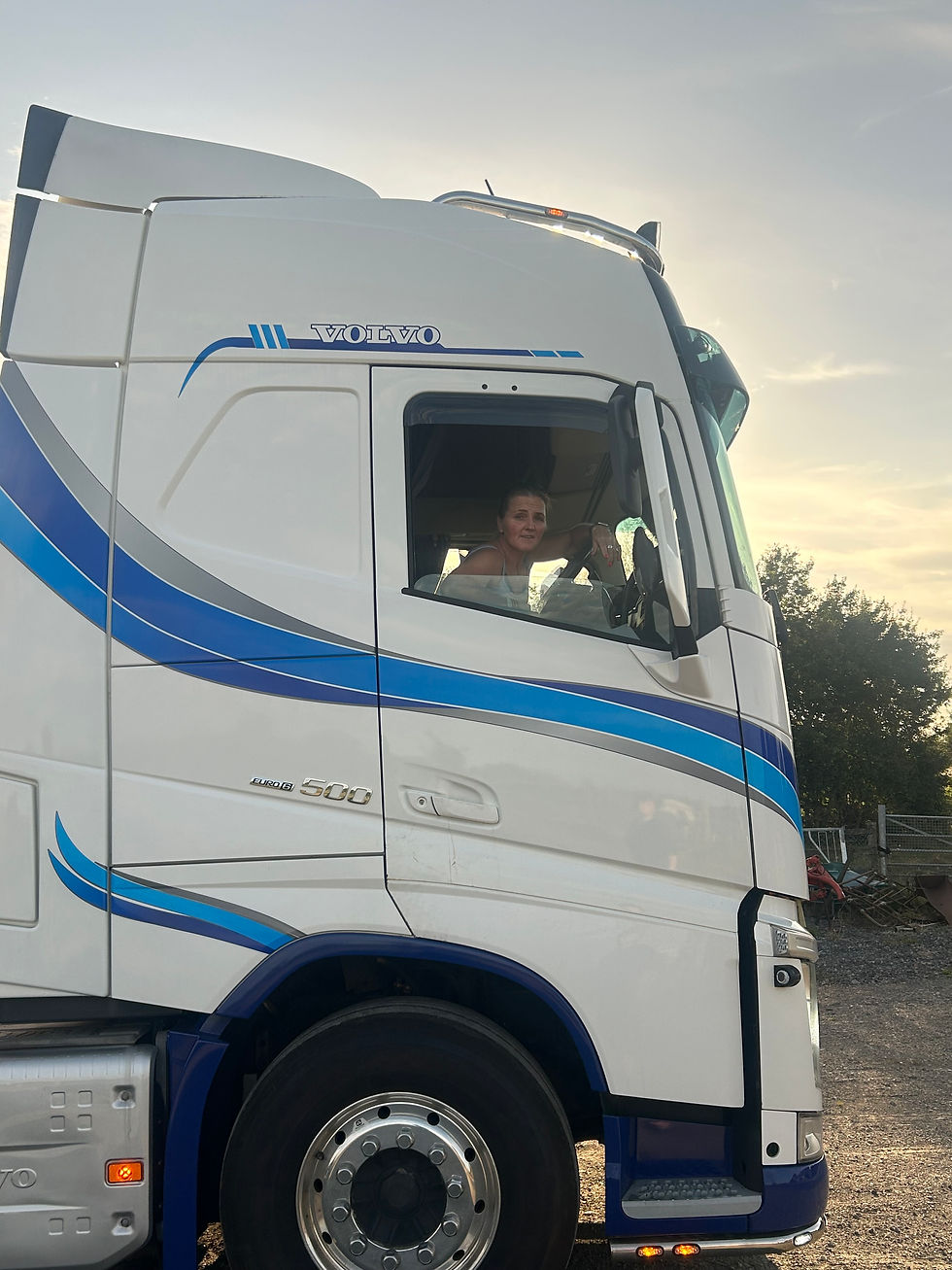
A practical guide to life as a female HGV driver.
This article is intended to support women in the HGV industry and encourage an honest, respectful conversation about their experiences. It is not intended to belittle men, stereotype women or suggest that every driver has the same experience. Any humour is shared in that spirit, never at the expense of someone’s gender or background. Driving ability and professionalism are not defined by gender, and everyone deserves the opportunity to learn, work safely and be treated with respect.
Lorry driving can be a brilliant job. There is independence, responsibility, variety and the satisfaction of getting a big vehicle and its load safely where they need to be.
There are also days when the traffic is dreadful, nothing goes to plan and finding a usable toilet feels like an expedition.
Women do not need a different set of driving rules. But we can encounter different practical problems, health needs and attitudes while doing exactly the same job. This guide looks at those openly, without assuming every woman has the same experience.
There are plenty of decent men in this industry: colleagues, employers, customers and friends who treat women as fellow professionals. There are also behaviours and working arrangements that need challenging. We can acknowledge both.
1. Choosing a job that suits you
“HGV driver” covers a huge range of work. Driving is only part of the job, and the rest can make the difference between a role you love and one that leaves you exhausted or injured.
Before accepting a position, ask:
What does a normal shift actually involve, including loading and unloading?
What will I be expected to lift, pull, push or handle alone?
What equipment and assistance are available?
What induction and vehicle familiarisation will I receive?
Are toilet stops allowed for in the planning, and what facilities are available at regular sites?
Are nights away required, and how is suitable parking arranged and paid for?
Who do I contact if I have a problem, particularly outside office hours?
How are inappropriate behaviour and customer complaints handled?
Where possible, see the work being done. A job description does not always mention the stubborn landing legs, heavy hoses or repeated manual unloading.
Being new does not mean you should be left to figure everything out. You deserve proper training and a fair opportunity to learn.
2. The physical work: be honest about the demands
Some jobs involve considerably more physical work than others. Strength, reach, fitness, technique, existing injuries and the condition of the equipment all matter.
Some women will find particular tasks harder than some male colleagues. Some men will struggle with those tasks too. The useful question is whether you can do the actual work safely, with the equipment and support provided.
That may mean choosing a different type of haulage. It may mean training, a suitable handling aid, help with a task or fixing equipment that should never have been that difficult to operate.
Stiff landing legs, damaged curtains and seized mechanisms are equipment problems. Treating them as a test of character does not repair them.
Use the techniques and equipment you have been trained to use. Do not improvise extensions, climb somewhere unsafe or put your whole body into a task until something gives. Stop and report the problem.
You do not have to injure yourself to prove you belong. Choosing work that suits you is a professional decision.
3. PPE and a cab that fit
Oversized gloves, loose clothing and boots that do not fit can make work more difficult and less safe. Ask for suitable sizes and cuts while keeping the protection the task requires.
During familiarisation, check that you can adjust the seat, steering wheel and mirrors to maintain a safe driving position and operate the controls comfortably. Raise any problem with reaching pedals, seeing properly or accessing the cab safely.
Use the steps and handholds, maintain three points of contact and avoid jumping down. Ask for a safe access arrangement for any task that involves working above ground level.
“That is what everyone else uses” is not a useful answer if it does not fit or allow you to work safely.
4. Banter, unwanted attention and boundaries
You can enjoy a laugh and still have boundaries. You can be friendly without being available. You can post a photograph of your lorry without inviting sexual messages.
Unwanted behaviour can include sexual remarks, comments about your body, repeated advances, touching, explicit pictures or persistent private messages.
A work-related context can extend beyond the yard to messages and social media.
Irish guidance on harassment also addresses behaviour by customers and other business contacts, not only colleagues. irishstatutebook.ie
You do not need to disclose a partner to make your refusal valid. “I am not interested” is enough.
If it feels safe to respond, keep it simple:
“Keep it professional, please.”
“I am here to do my job. Stop commenting on my body.”
“I have already said no. Do not ask again.”
“This number is for work. Do not send me personal messages.”
You do not need a clever comeback. You also do not have to confront someone alone to earn the right to report what happened.
It can be much harder when the person controls your work, signs your paperwork or is the only other person on a remote site. Put your safety first. Move to a safer place if you can and contact someone who can help.
5. If it continues, or you want to report it
Where possible, keep a factual record: what happened, when, where, who was involved and any witnesses.
Preserve messages and screenshots, including the sender and date, before blocking or reporting an account. Keep copies securely and avoid circulating them unnecessarily.
Use your employer’s reporting procedure. If your usual contact is involved, use another manager, owner or the alternative route in the policy.
A union representative or an independent adviser may help. The Workplace Relations Commission and the Irish Human Rights and Equality Commission provide information about employment equality and harassment. Workplace Relations Commission
If you are self-employed, you may need to raise the matter with the customer or site management; the applicable legal route can differ from that of an employee.
Ask for a practical response: a different site contact, no lone visits while the concern is addressed, an investigation or another appropriate measure. Reporting should lead to action, rather than leaving you to manage the same situation next week.
Threats, stalking, assault or immediate danger may require Garda involvement. Call 112 or 999 in an emergency.
If you froze, laughed awkwardly or said nothing at the time, that does not make the behaviour your fault.
6. Periods on the road
Periods and long driving days are not always a convenient combination. Unpredictable delays and poor facilities can turn something manageable into a stressful shift.
A small supplies bag can help. Include your usual menstrual products, spare underwear, spare trousers, toilet paper, hand-cleaning supplies and sealable disposal bags.
Carry any medication you normally use in its original packaging and follow its instructions.
Plan suitable stops where possible, with an alternative if your first choice is unavailable.
Follow the instructions for your menstrual products; a long shift is not a reason to leave them in longer than recommended. Some products need better handwashing and changing facilities than others.
Do not flush pads, tampons or wipes. Use an appropriate bin, or a sealed bag until suitable disposal is available.
You can tell your planner, “I need access to toilets more frequently today,” without giving everyone your medical history.
Waiting time at a site is not automatically a useful opportunity if you cannot leave the vehicle or access a toilet.
Heavy bleeding, significant pain or symptoms that interfere with everyday life deserve medical advice. The HSE advises contacting your GP if bleeding worries you, becomes heavier or comes with symptoms such as pain or bleeding between periods.
If you are dizzy, faint, too unwell or unable to concentrate safely, stop somewhere safe and seek help. Do not keep driving to avoid inconveniencing someone.
7. Perimenopause and menopause
These can affect sleep, temperature, mood, concentration and periods. Experiences vary, and symptoms can change over time.
The HSE lists hot flushes, sleep difficulties and problems with memory or concentration among possible symptoms. www2.hse.ie
Practical arrangements worth discussing include:
Breathable layers that still meet PPE requirements.
Safe temperature control in the cab and sleeping area.
Reliable access to toilets and drinking water.
Shift planning that takes significant sleep problems into account.
Time for appointments and an agreed contact for difficult days.
Keep a brief symptom record if it helps you explain what is happening to your GP. You do not have to diagnose yourself or decide treatment alone.
Poor sleep and difficulty concentrating matter in a safety-critical job, whatever the cause. Assess how you feel before driving and speak up if you cannot drive safely.
Check with a pharmacist or prescriber if medication might affect alertness.
Any vaginal bleeding after menopause should be checked by a GP, even if it happens only once or is a small amount. Do not assume it is simply another normal change. www2.hse.ie
8. Toilets and washing facilities
A toilet needs to be usable: accessible, reasonably clean, private, with a working lock and suitable handwashing facilities. Somewhere to dispose of menstrual products matters too.
A private single-user toilet can be perfectly suitable. The problem is being offered a urinal-only facility, a filthy cubicle, no privacy or no access at all.
Ask where the suitable toilet is, how to access it and whether it will be available during your visit. Regular problems should be raised with your employer so access can be discussed with the customer in advance.
For accuracy in Ireland, HSA guidance on driving for work says there is no specific legal requirement to provide welfare facilities for visiting drivers.
It describes asking to use them as reasonable and recommends prior arrangements between the businesses. That does not make poor provision acceptable; it means we should be careful about claiming an automatic legal right at every site. Your Questions Answered
Report recurring refusals or unusable facilities, giving dates and locations. Explain the effect on the work so planning can change.
Portable toileting products may help some drivers as an emergency backup. Their suitability depends on privacy, hygiene and safe use. They do not replace proper facilities, and nobody should have to expose themselves or enter an unsafe area to use one.
Avoid making a routine of restricting drinks or holding on for hours because the route has no workable toilet plan. That is a planning problem to address.
9. Lone working, parking and personal information
Agree who you can contact, how check-ins work and what happens if you miss one. HSA guidance makes clear that employers need to assess lone-working risks and arrange appropriate support. Health and Safety Authority
For nights away, ask about suitable parking and payment before you leave. Consider lighting, access to facilities, the route back to your cab and the surroundings. A parking space being available does not make it suitable for the night.
Keep doors secured, keep your phone charged and know your location. Verify unexpected visitors or instructions through a known work contact. You do not have to open the cab to someone because they knock.
Be thoughtful about social media. Posting after leaving a location is generally a better habit than sharing your exact overnight spot in real time. Avoid publishing your routine, home address or details that reveal when you will be alone.
These precautions cannot guarantee safety. Responsibility for threatening or abusive behaviour remains with the person doing it.
10. Being underestimated, watched or expected to prove yourself
Some women encounter surprise that they can drive, reverse or handle the job.
Unsolicited commentary can be exhausting, especially when you are still learning.
Keep the standard where it belongs: safe, competent work. Take the shunt. Get out and look. Ask for clarification. Refuse an unsafe shortcut.
Someone else’s audience does not need to become your reversing plan.
You do not represent every woman in haulage each time you make a mistake. You are one driver, doing one job, with the same right to learn as anyone else.
Build a few reliable contacts: an experienced driver, a supportive manager, a friend who understands the work or a professional network.
Ask women’s groups whether working drivers are included and whether their support is accessible around driving shifts.
11. What employers can do
Much of this is ordinary good management:
Provide proper induction, suitable PPE and maintained equipment.
Assess the physical tasks and provide training, handling aids or assistance.
Plan realistic shifts, toilet access and suitable overnight parking.
Assess lone working and provide an effective emergency contact.
Make reporting procedures clear and act on concerns involving staff or customers.
Discuss health needs privately and agree practical support.
Include drivers in workplace support initiatives, even when they rarely visit the office.
A supplies bag, a good sense of humour and a thick skin can make some days easier.
They cannot replace a safe working environment or an employer who backs their driver.
You are allowed to enjoy this job
You can love lorry driving and still say that parts of the industry need to improve. You can be capable and need help with a task.
You can enjoy banter and reject unwanted attention. You can choose a role that suits your body, health and home life.
You deserve to do your job safely, use a decent toilet and be treated as a professional. That is a reasonable place to start.
Sources and further help
This is practical information for an Irish audience, not individual medical or legal advice.
Health symptoms and employment circumstances need individual assessment.
HSE — Heavy periods:https://www2.hse.ie/conditions/heavy-periods/
HSE — Menopause symptoms:https://www2.hse.ie/conditions/menopause/symptoms/
HSA — Driving for Work: Your Questions Answered:https://www.hsa.ie/eng/Vehicles_at_Work/Driving_for_Work/Driving_for_Work_Your_Questions_Answered_Version_2_.pdf
HSA — Lone workers:https://www.hsa.ie/eng/topics/hazards/lone_workers/
Irish Code of Practice on Sexual Harassment and Harassment at Work, 2022:https://www.irishstatutebook.ie/eli/2022/si/106/made/en/print
Workplace Relations Commission:https://www.workplacerelations.ie/
Irish Human Rights and Equality Commission:https://www.ihrec.ie/



Comments